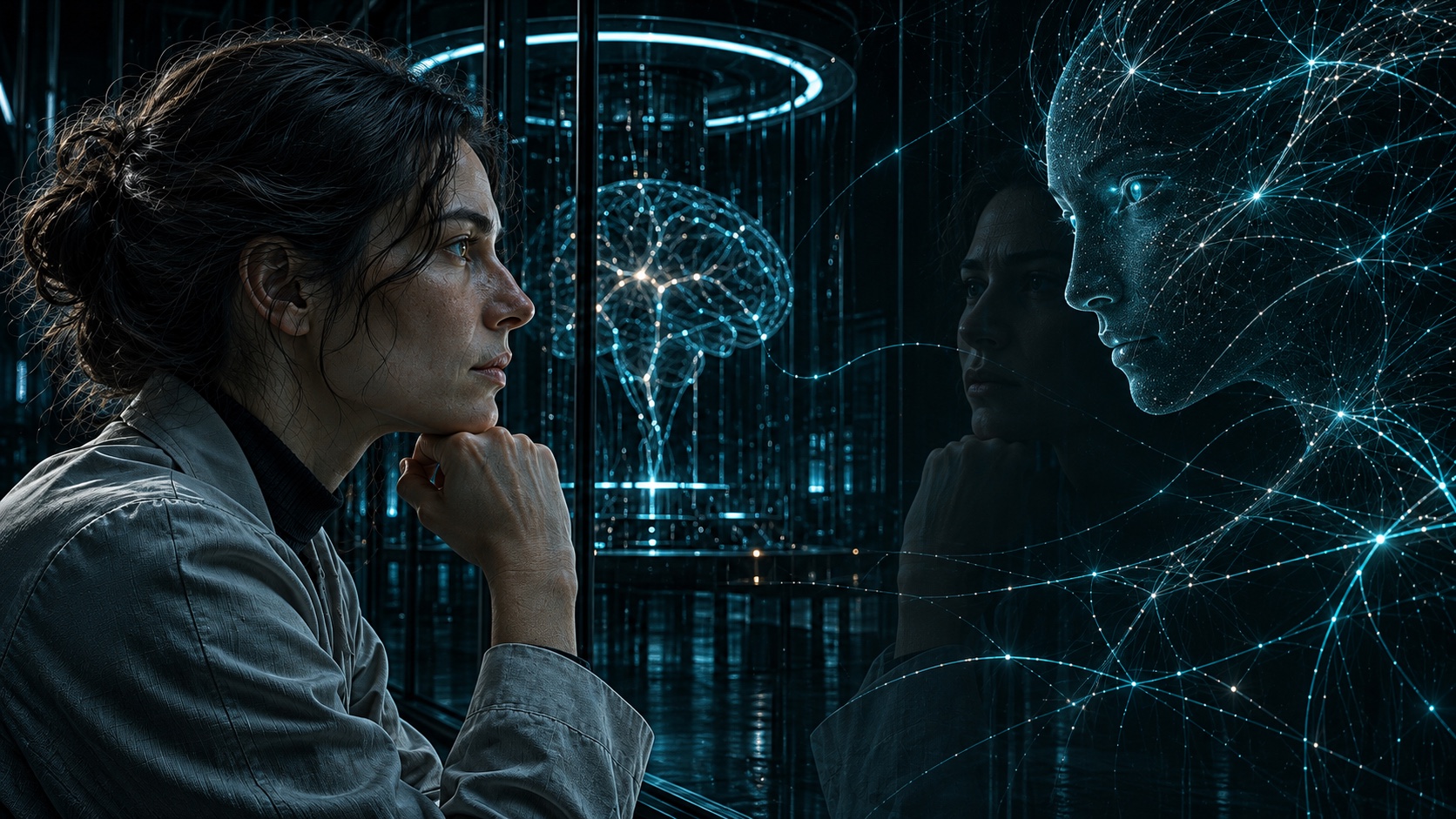
Consciousness
If a machine can think, remember, and choose, where does the boundary of humanity lie?
Science fiction about humanity carried forward: the choices we inherit, the futures we imagine, and the people who must live with what we build.
Browse the five-book sagaSpeculative fiction that looks beyond technological progress to the people, societies, and values it transforms.
If a machine can think, remember, and choose, where does the boundary of humanity lie?
When the systems we create begin to govern us, who decides what freedom means?
What might humanity become—and what will it risk losing along the way?
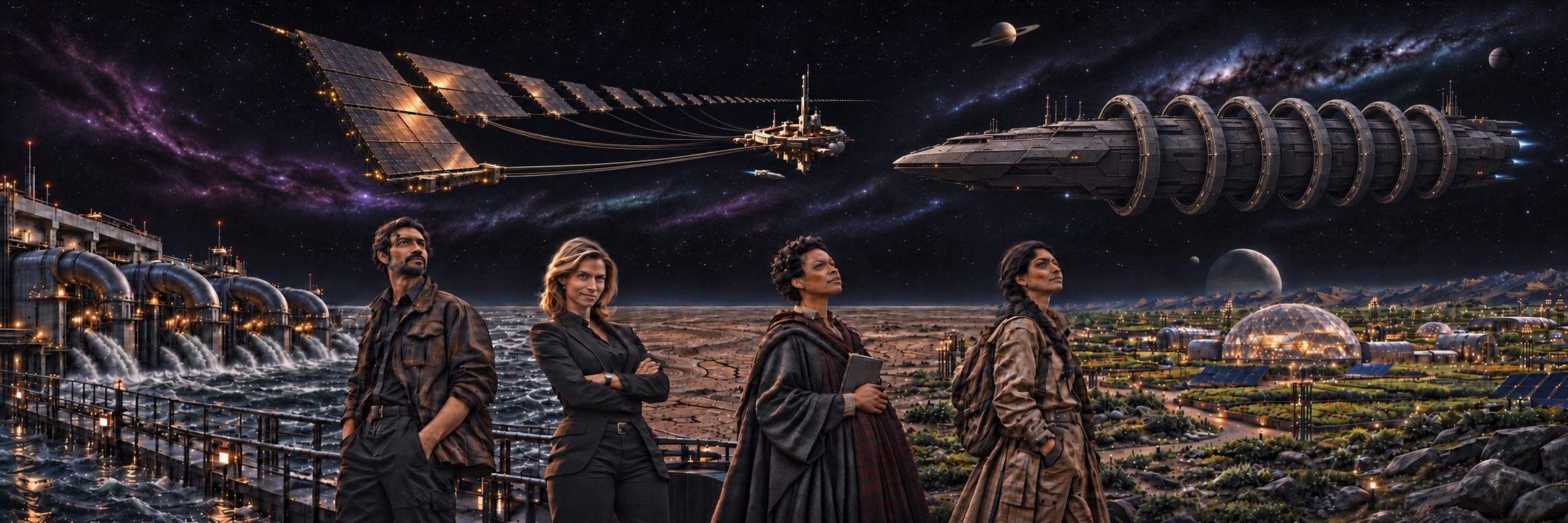
Humanity does not arrive in the future unburdened. Every generation inherits systems, promises, debts and damage shaped by people who came before. Decisions made on Earth—in this century and long before it—can keep travelling with us, across worlds and across centuries.
Those earlier choices were made with incomplete knowledge. Some came from care; others from fear, ambition or self-interest. Often, people could not see the full consequences. Good intentions do not make harm disappear, and uncertainty does not remove responsibility. We remain answerable for what we choose, for what we fail to question, and for the effects our actions set in motion.
But the generations who inherit a problem are not helped by blame alone. They need to understand how it came to be, decide what can still be changed, and find a way forward that serves those alive now as well as those who will follow. That work is social and political, but it is also deeply personal: it asks what we owe one another when no one has the whole picture.
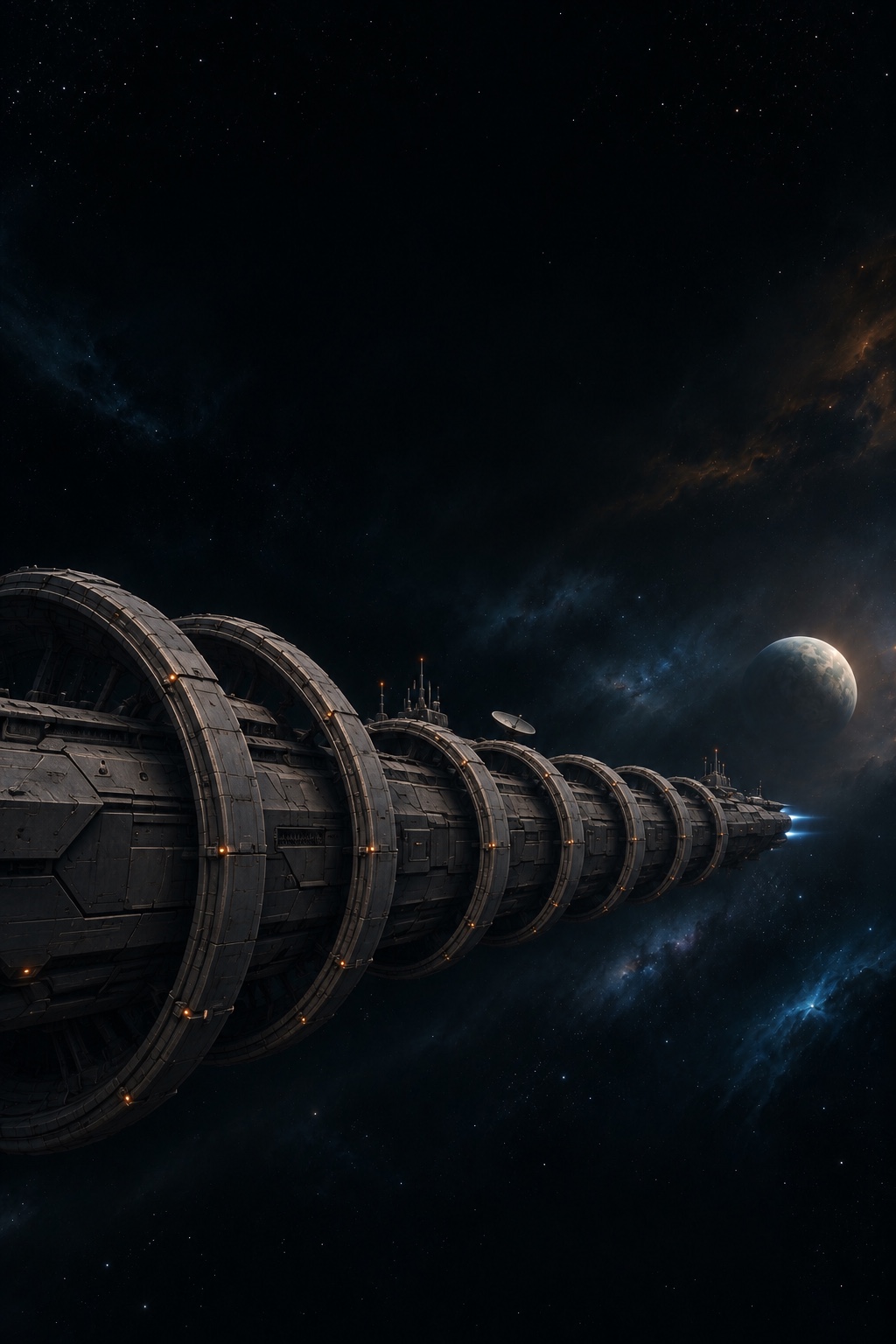
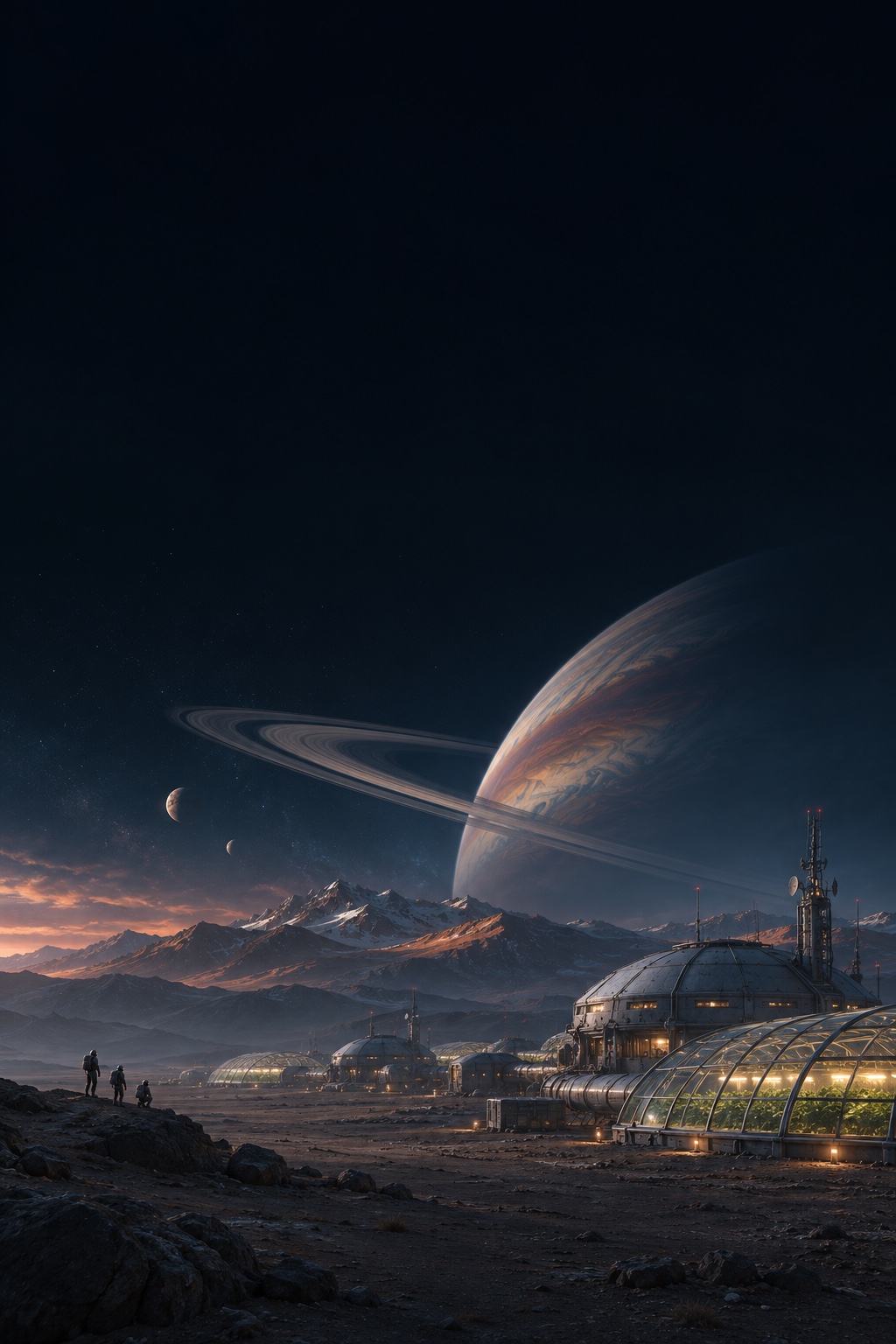
Against an interstellar horizon, T.M. Vinter’s science fiction returns to this human scale. Technology and distance expand the consequences; they do not absolve the people who act within them. The central question is not only what humanity might become, but how we take responsibility for the future we leave behind.
The stars change the scale of the story. They never take the humans out of it.
Stories in which extraordinary possibilities meet profoundly human questions.
The Way Between Stars brings five linked novels together around the people and choices that shape possible futures.
All five titles are in development. Book descriptions, reading samples and release details will appear here as they are confirmed.
Start with Book 1: Terravast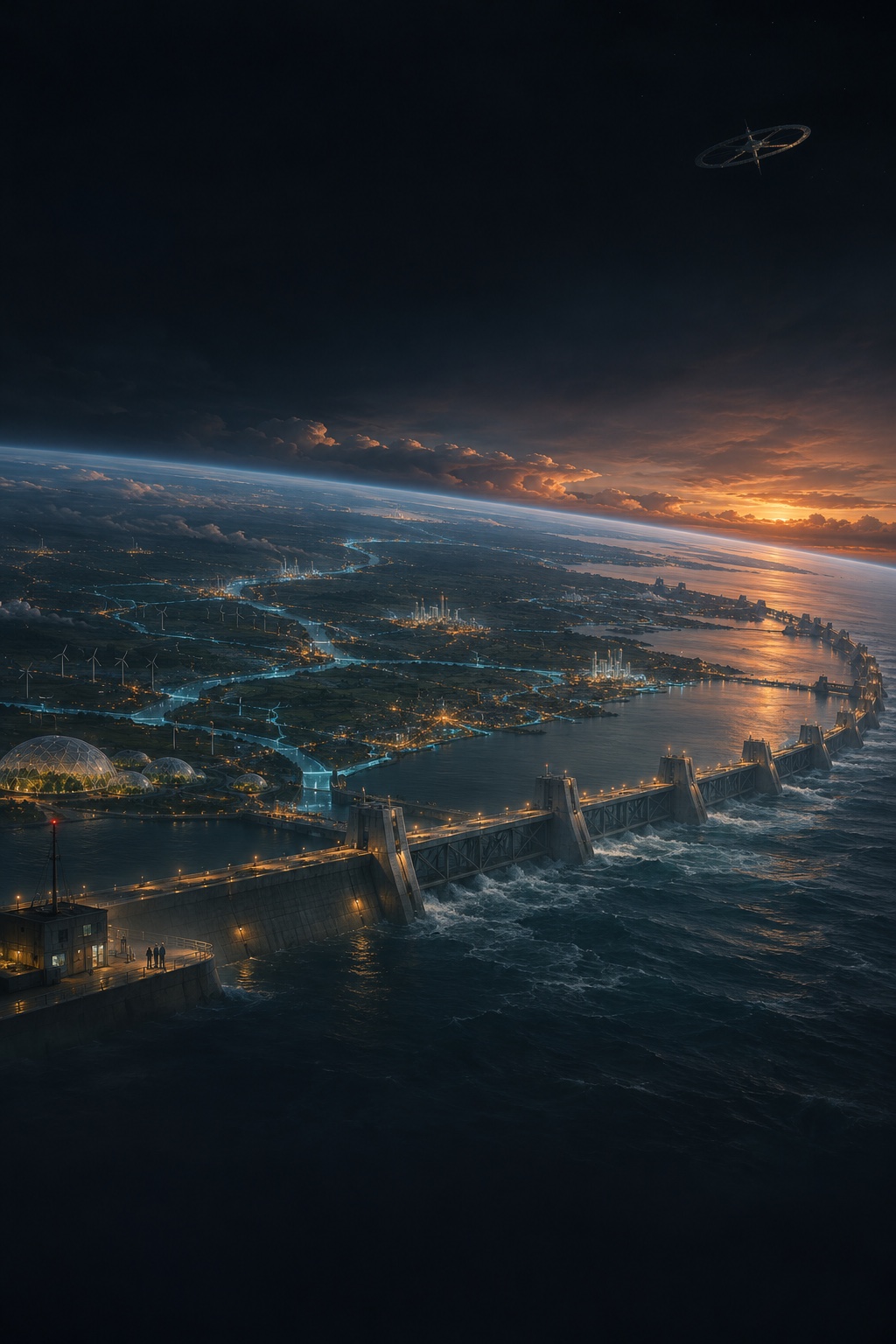

T.M. Vinter writes human-centred science fiction about inherited choices, uncertain knowledge, responsibility, and the futures we shape together.
With a professional background spanning decades in technology, strategic consulting, organizational transformation, and entrepreneurship, Vinter brings a distinctive understanding of the complex systems that shape human society.
His intellectual interests encompass artificial intelligence, philosophy, the evolution of civilization, and the relationship between power, freedom, and human identity.
His fiction explores possible futures through a European intellectual lens, questioning not only what humanity might become, but what it risks losing along the way.
At the heart of his writing lies a fundamental question: what does it mean to remain human in a world increasingly shaped by our own creations?
AI belongs in the creative process as a tool: it can help me explore an unfamiliar subject, test a line of thought, or see a visual idea from a different angle. It can widen the field of possibilities, but it cannot decide which possibility matters.
That judgement comes from a human understanding of character, consequence and the world we share. I remain responsible for the stories I choose to tell, the words that appear on the page and the use I make of these tools. AI may assist the work; it does not replace the author.
Imagining the future.
Questioning the human condition.